TITLE MOTION / TRANSITION
Open Animation
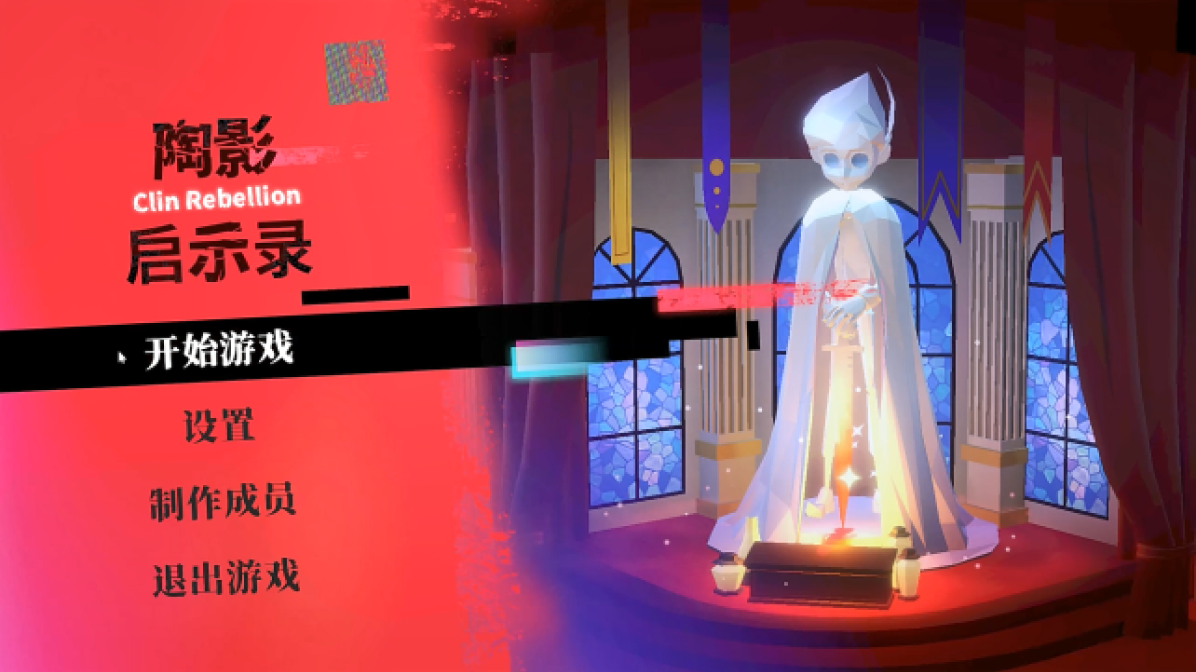
A graphic opening sequence establishes the project tone through fractured shapes, typography, and controlled reveals. Play the full 30-second opening cinematic (English build) right here.
ENVIRONMENT / VFX / MOTION
A stylized game-art collection spanning levels, combat effects, card motion, and interface animation.

TRAILER & STEAM WISHLIST
TITLE MOTION / TRANSITION
A graphic opening sequence establishes the project tone through fractured shapes, typography, and controlled reveals. Play the full 30-second opening cinematic (English build) right here.
CONCEPT / CHARACTER ART / RIGGED 3D / VFX

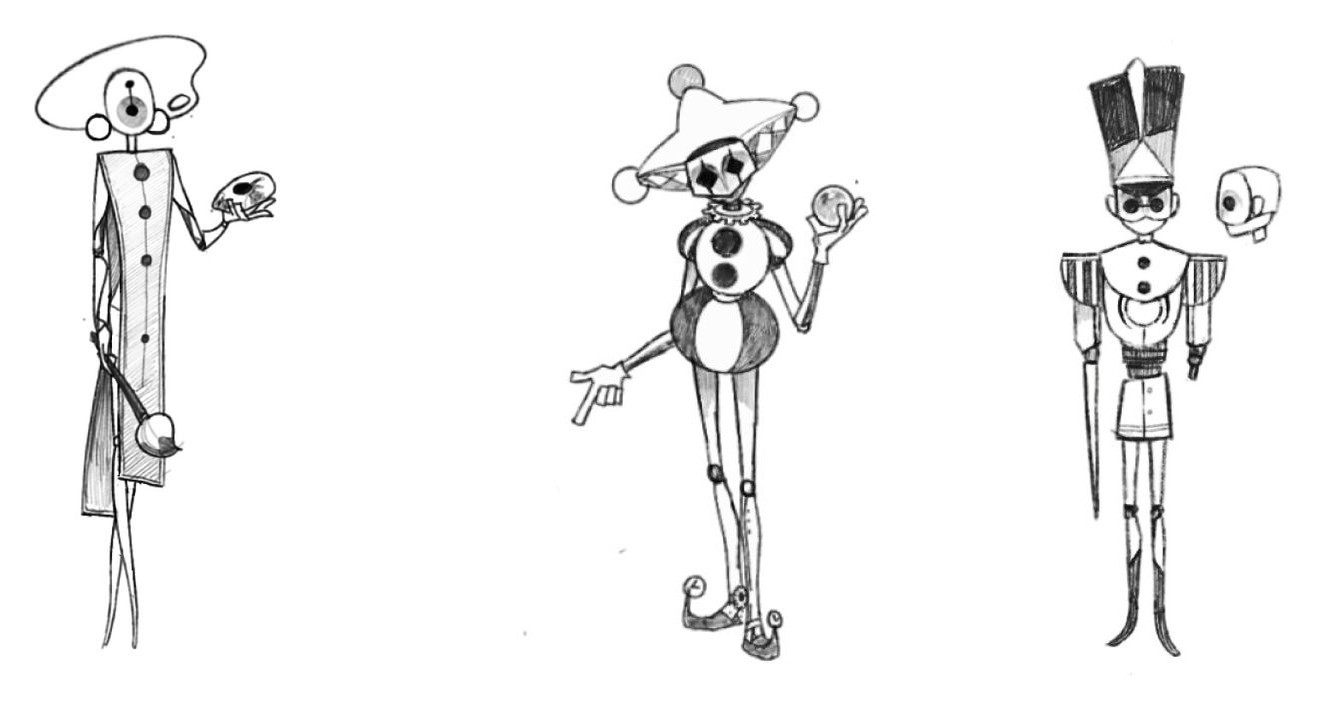
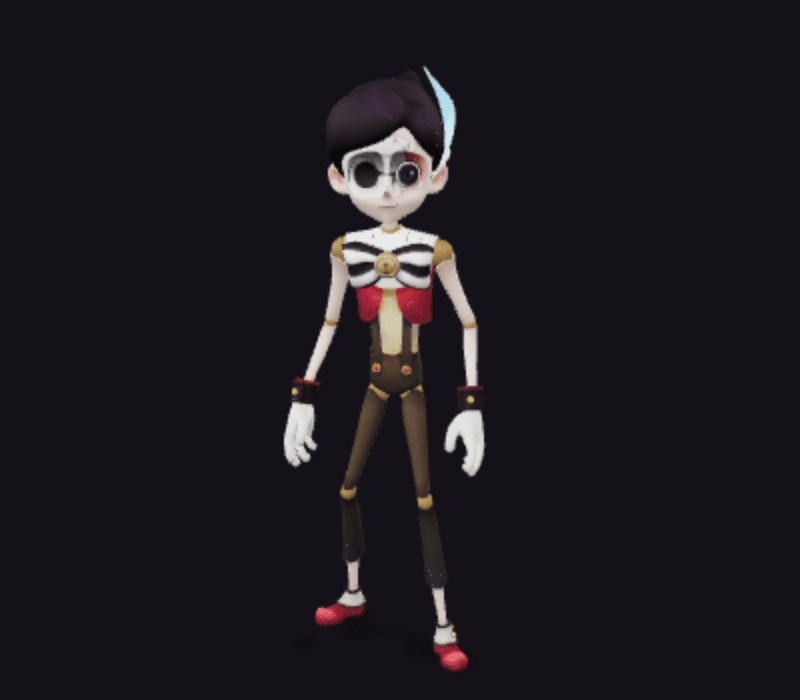
Protagonist 42 — a broken-mask puppet boy in a Pinocchio costume — and the enemies of the show. Each character below pairs its rigged in-engine model (switch the real game animations) with its attack design; enemy radar charts are redrawn from the design doc, normal vs elite. The VFX reel is captured straight from the game, and the combat-pacing curve at the very end is the redrawn rhythm plan every encounter was tuned against.
Intensity peaks at the perfect-dodge charge.
Redrawn from the design doc: intensity rises through exploration, peaks at the perfect-dodge charge, settles after victory, and bumps again on the key-clue bonus.
A broken-mask puppet boy in a Pinocchio costume.
CAST — PICK A CHARACTER
PROTAGONIST / SWORD COMBO
The show's star Kiln Person. An 81-bone rig with the full sword moveset baked from Unity — idle, run, dash and the four-hit combo chain.
Dash — perfect dodges charge energy


CARD ART / SYSTEM
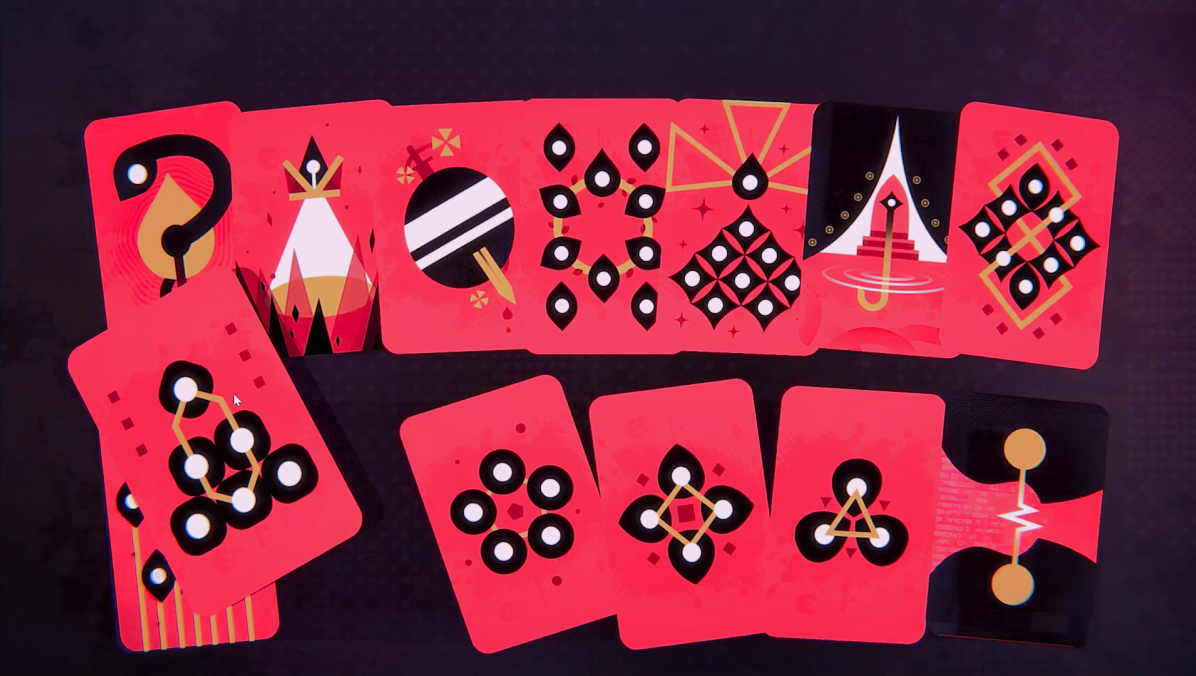
The card deck is the story: from thumbnail sketches to the final red-and-black set, each face of 2-10 and J/Q/K/A encodes an event of the show's hidden narrative. Hover the cards below for the holographic tilt, then grab one and throw it around — the web cards replicate the game's Unity CardVisual component (hover scale, velocity-based follow rotation, springy return).
Each card face encodes an event of the show's hidden narrative.


LEVEL DESIGN / LIGHTING / POST
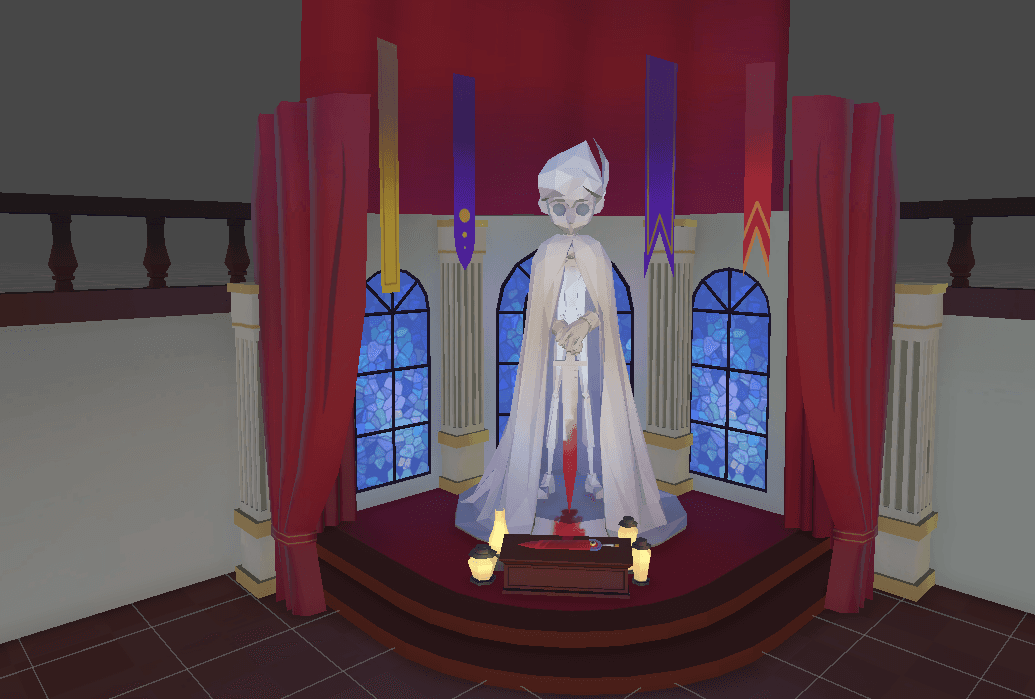
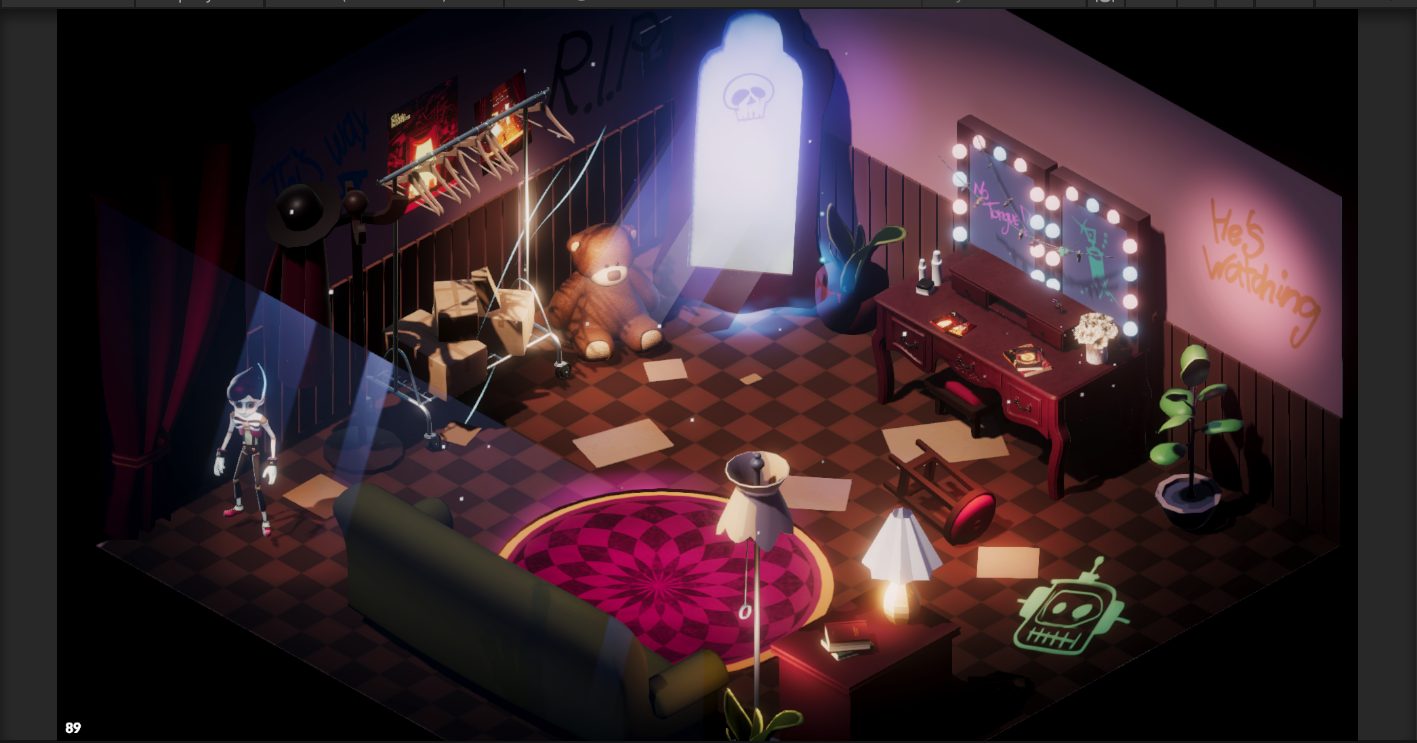
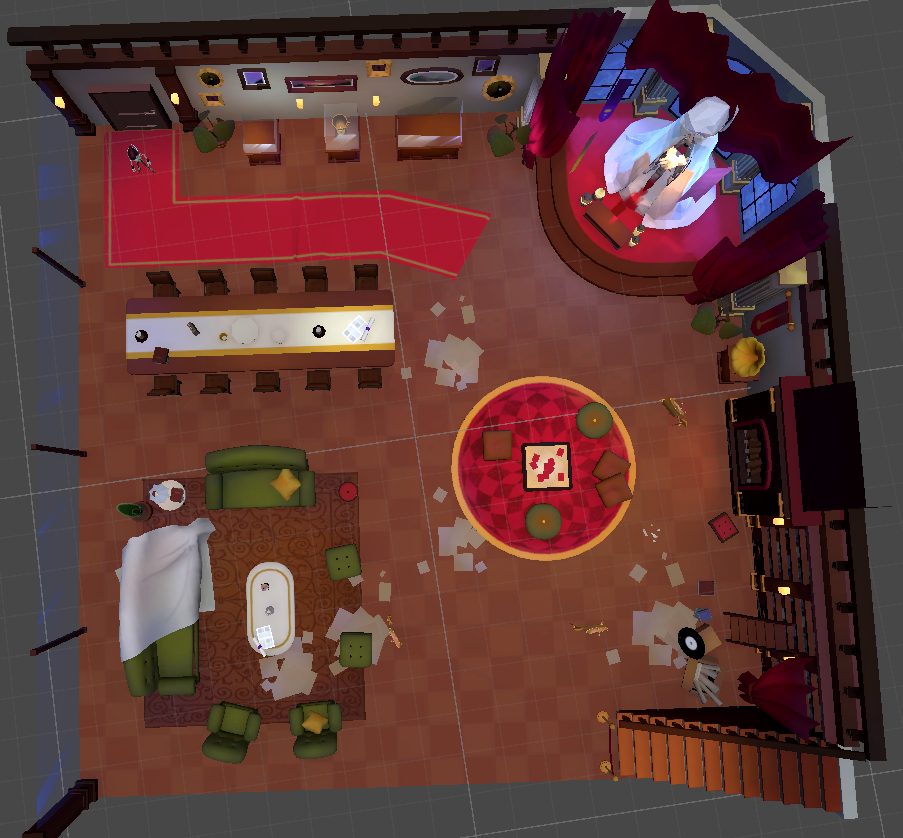
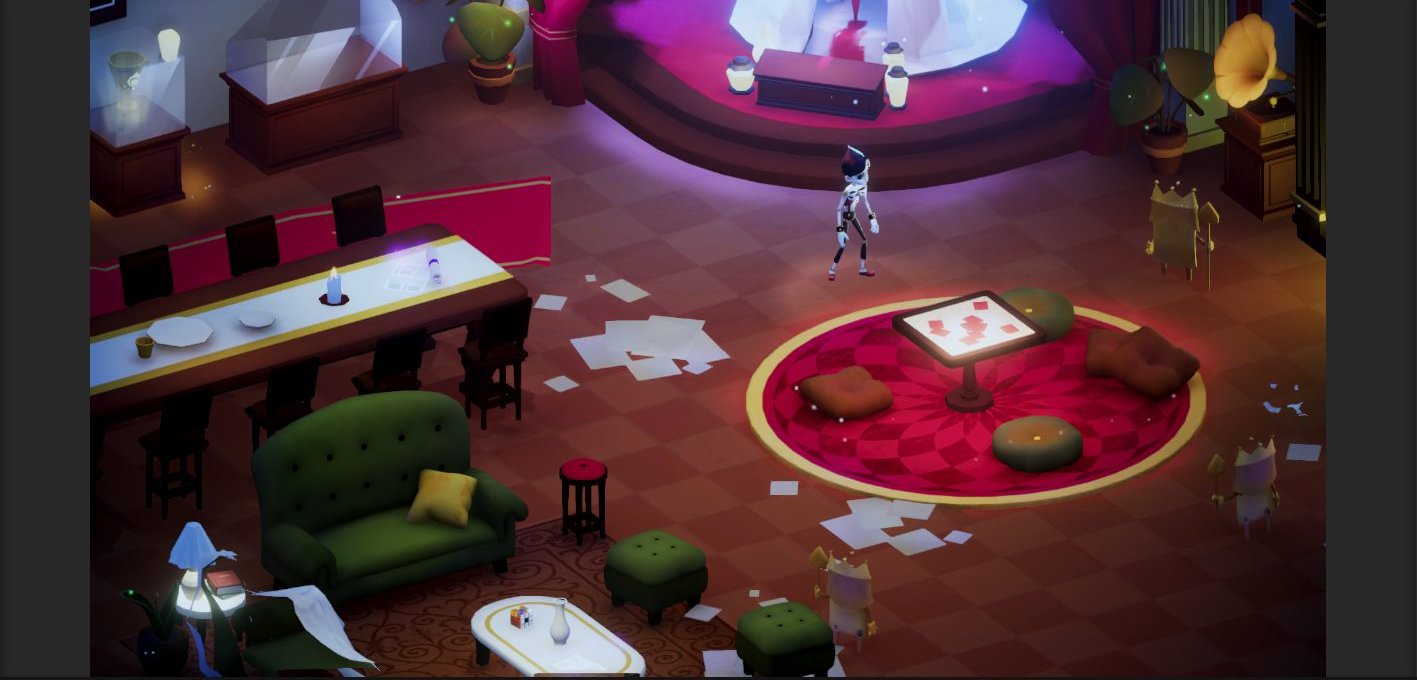
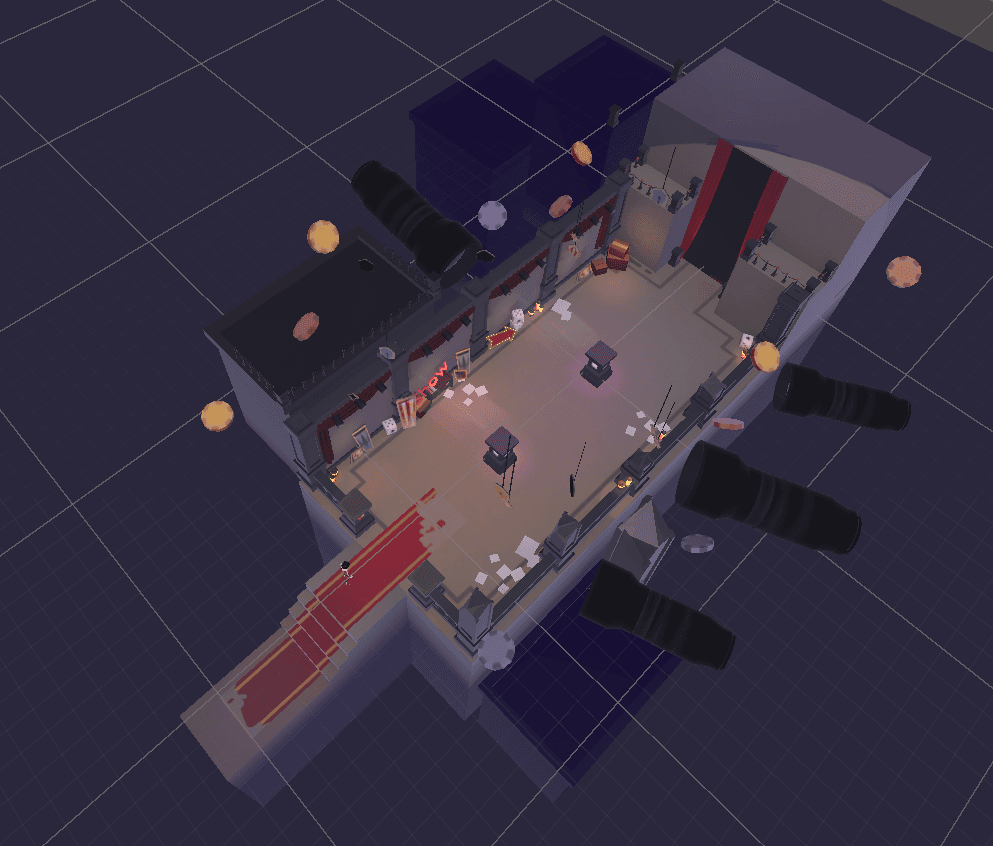
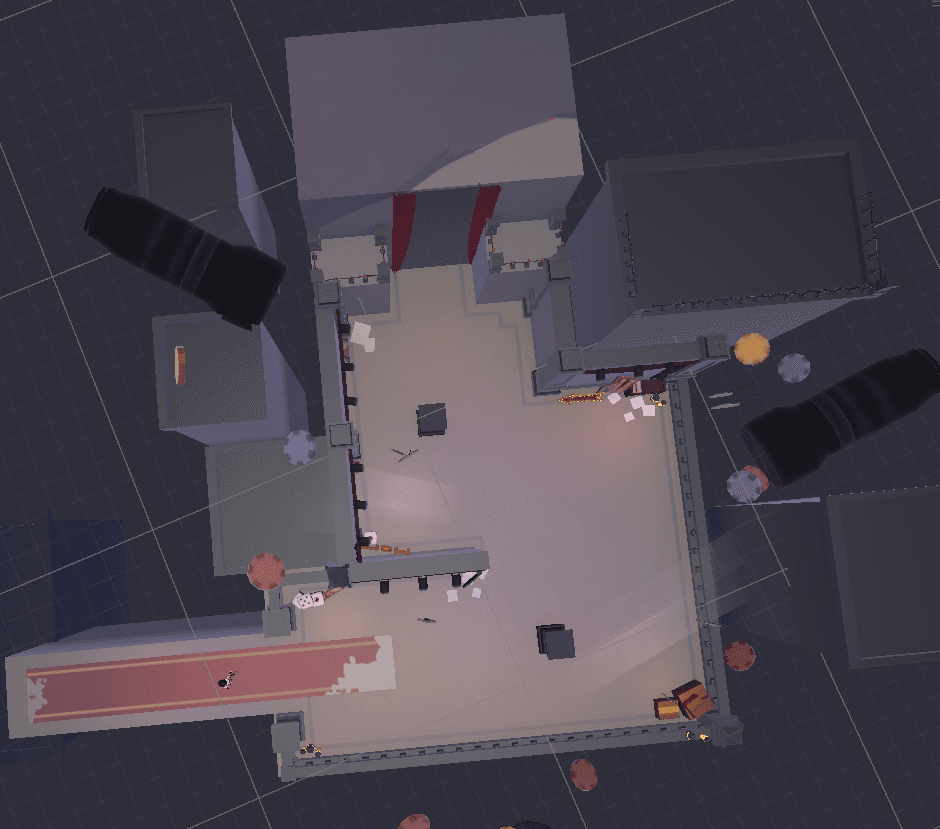
From isometric layout concepts and a whitebox pass to the final lit scenes — narrative environments use staged lighting to guide the player, while combat spaces rely on high-contrast glowing landmarks to mark the action zones. Drag each slider below to compare raw materials against the post-processed final.





INTERFACE MOTION / REWARD FEEDBACK
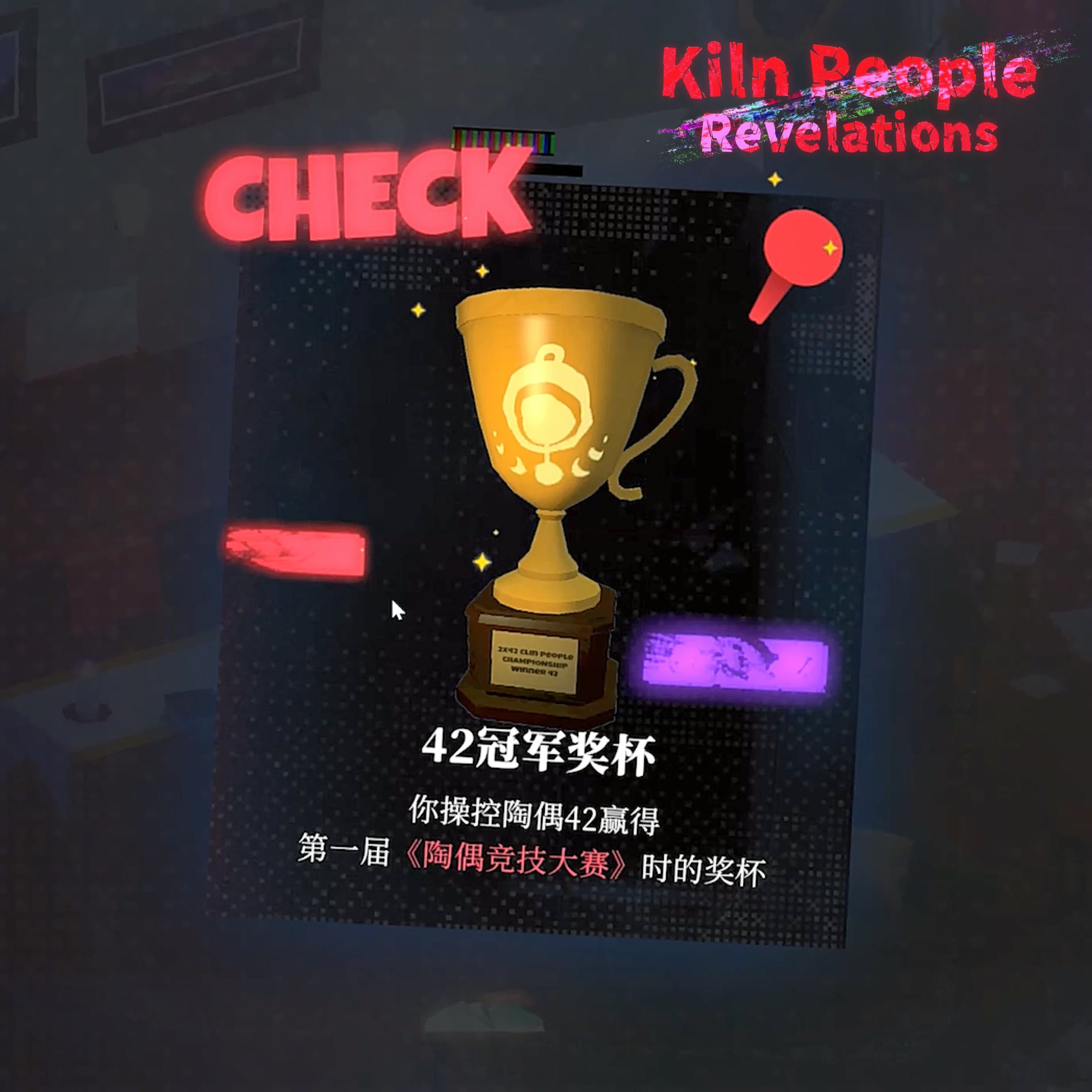
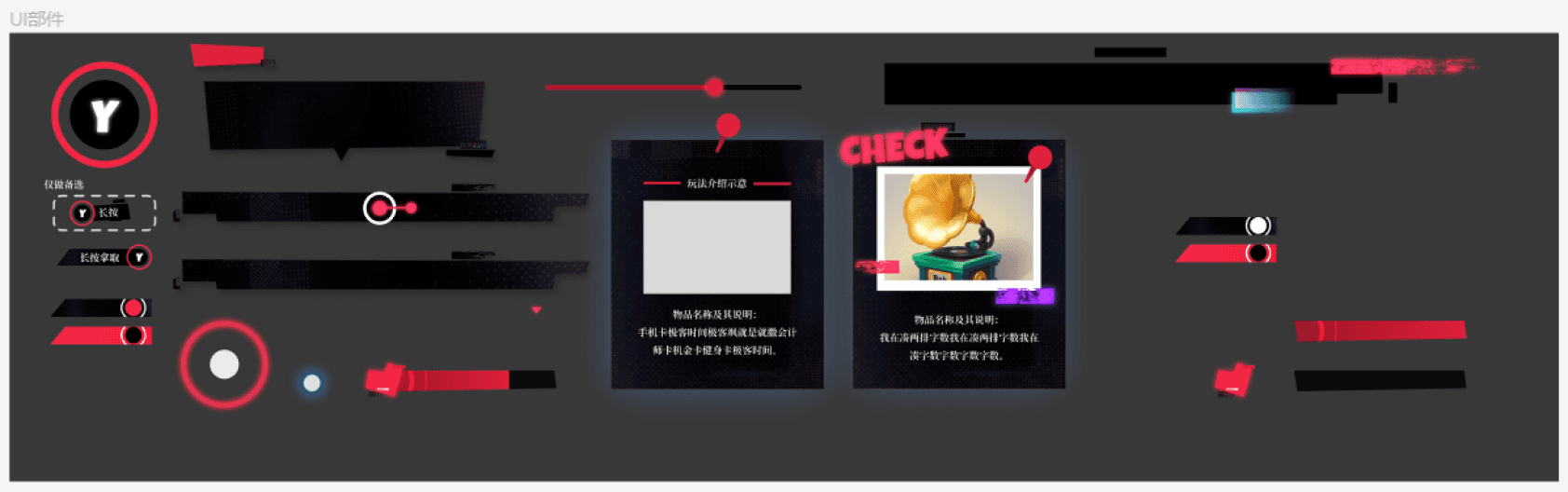
The game's 2D visual language and the systems that drive it: the Visual Elements sheet collects card-suit motifs, in-game newspapers and diegetic props; the design sheet defines HUD, dialogue and inspect panels. Below them, the PlayMaker FSMs that actually run the interface — button hover/click states, the newspaper pickup and cutscene control — captured from the working Unity project.



IN-GAME / 1920PX
Raw in-game captures from the current build — levels, combat, dialogue and interface in context.

KEEP EXPLORING


 50 HP
50 HP