Emotional Experience: How Volcano Princess Immerses Players in the Father Role
中文标题:#模拟养成# #情感体验#《火山的女儿》如何吸引玩家在一声声“爸爸”中迷失自我
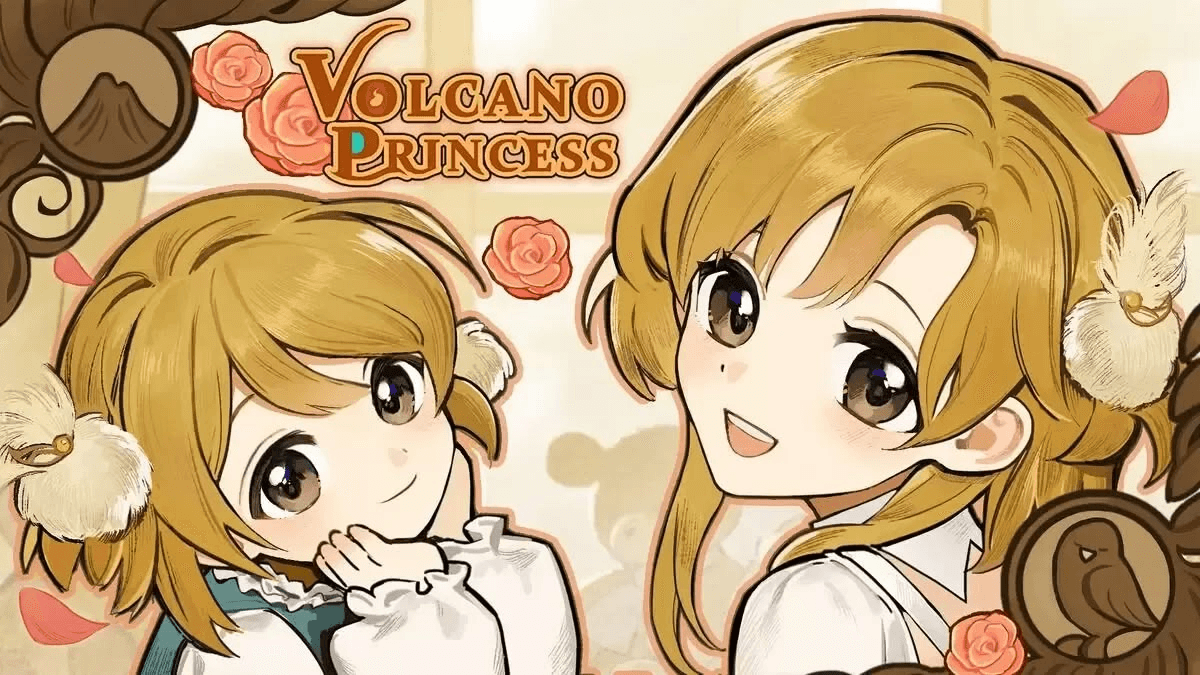
Volcano Princess (火山的女儿) is a multi-ending bishoujo (beautiful girl) raising simulation. The player acts as a father raising his daughter while exploring the secrets of the Volcano Kingdom. This article reorganizes a research note on why the game works: what it does differently from other raising sims, and which shifts in player needs it happens to meet.
中文要点:本文围绕《火山的女儿》的市场表现、与同类养成游戏相比的独创性(世界观与人设多样性、玩家身份体验、骰子小游戏设计),以及背后的用户需求变化三个层面进行分析。
Game Overview
The game offers more than 50 possible endings, with emotional endings completely separated from career endings. There are 12 or more emotional endings, and more than 5 romanceable male and female characters each.
Commercially it behaved like a dark horse. After launch on April 21, its heat peaked at number one on the Steam China regional chart:
Moment | Steam top-sellers position |
|---|---|
Peak heat after launch | #1 on the China regional chart |
Release week (launched April 21) | #8 for the week |
Two weeks after launch | #11, still hovering around the top 10 |
Player statistics from Xiaoheihe (Heybox) show that even after the new-release honeymoon period, the game kept impressive concurrent player counts and sales, with a 96% positive review rate on Steam - remarkably rare for the notoriously hard-to-please simulation genre. The surrounding top sellers were mostly hardcore FPS or open-world titles; despite low general expectations for “domestic games” and a modest 35 RMB price tag, it managed to stand out.
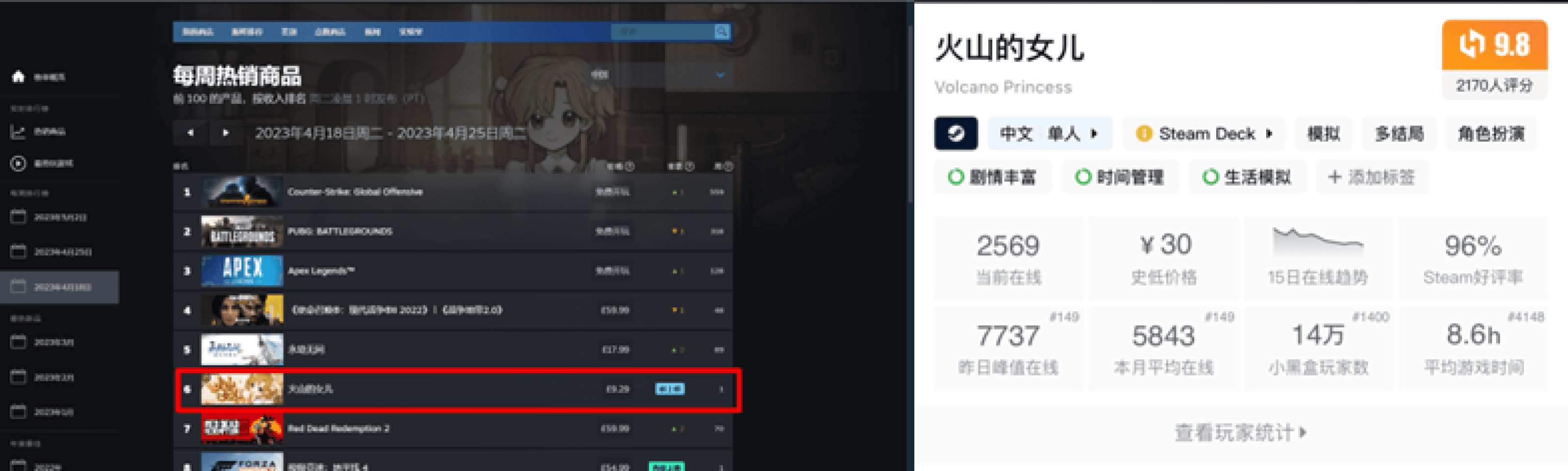
中文对照:游戏首周热度最高达 Steam 中国区榜一,发售周排第八,两周后仍列第十一。小黑盒数据显示其度过新品期后仍有不俗在线率和销量,好评率高达 96%。周边热销品多为重度 FPS、开放世界品类,35 元的定价能徘徊在热销收入榜前十左右,是值得关注的黑马。
What Sets It Apart from Similar Raising Sims
Rich Worldbuilding and Diverse Character Options
Set in a medieval sword-and-sorcery world, the highly free choice system pulls in players from many different communities. The romanceable cast covers a wide spread of archetypes:
A gentle restaurant-owner big sister who cooks.
A childhood best friend.
An aloof, tsundere princess.
A boisterous, overpowered knight big sister.
A cold but obedient young nun (an NPC).
A slightly clumsy but loyal, puppy-like prince.
A seemingly flirtatious but deeply devoted werewolf knight.
Almost every character can be romanced, and players can even unlock bizarre endings - marrying all 5 male leads at once, or ending up with both the prince and the princess. The breadth of options satisfies the preferences of very different player circles.
中文对照:剑与魔法的中世纪世界观,高度自由的选择取向吸引了多圈层玩家。从会做饭的餐厅老板姐姐、幼驯染闺蜜、高冷傲娇公主,到姐姐骑士、小修女、小狗王子和狼人骑士,几乎每个角色都可攻略,甚至可以解锁“和 5 个男主一起”“与王子公主三人一起”等怪结局。
A Stronger Focus on Player Identity and Immersion
The emotional experience turns stats into more than cold numbers - they become a testament to the life shared between father and daughter. Princess Maker also uses a father raising a daughter, but there the player mostly micromanages her. Here, the game repeatedly re-centers the player's own identity as the father, so the experience reads as exploring the world together with her.
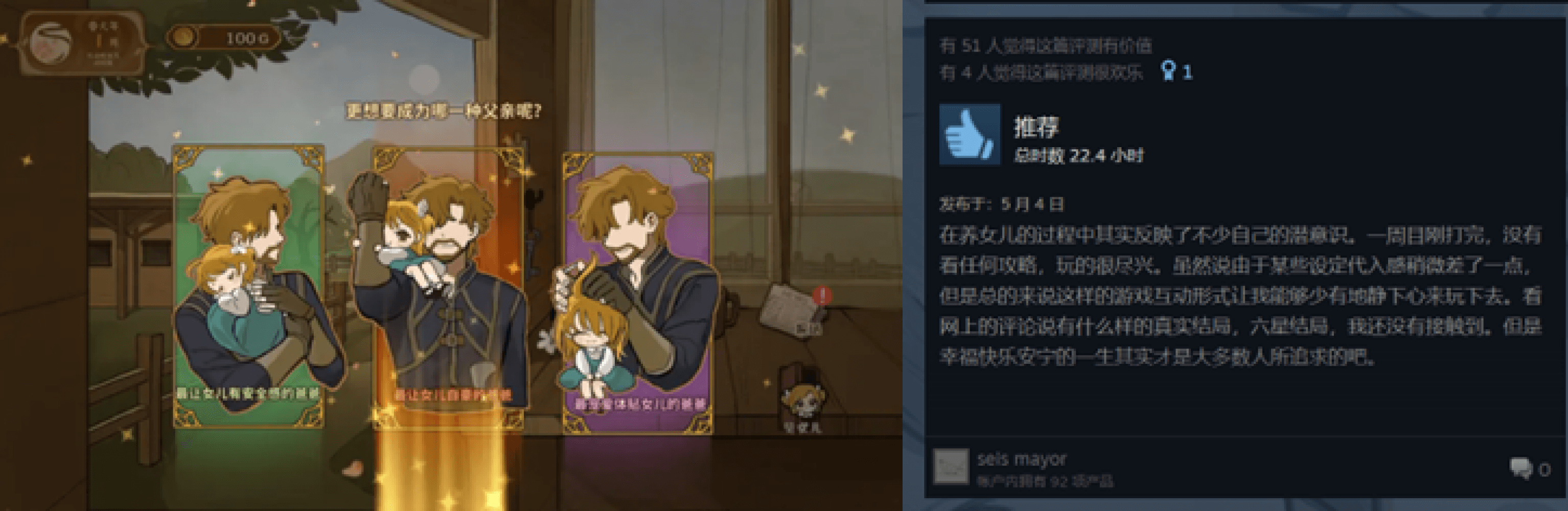
The gameplay ends up feeling like mutual growth with the daughter rather than dictating her life. Players truly experience the joy of “raising a daughter,” becoming part of her growth - achieving a co-creation experience between the player and the game.
中文对照:游戏从开局到养成中后期两次提问“你想成为怎样的父亲”,并在共同完成的事件中体现父亲选择对女儿教育的影响;女儿会询问父亲喜欢的颜色和动物、在设定的生日送礼、在剧情中不断鼓励父亲。玩家由此成为女儿成长的一部分,而非规划人生的机器,实现玩家与游戏的共创。
A Well-Designed, Fun Dice Mini-Game
Entertaining mini-games are excellent pacing regulators in simulation games. The dice mini-game here is a uniquely refined design for the genre - somewhat reminiscent of Gwent in The Witcher 3, yet still impressive on its own. The rules are simple enough to explain in two points:
Each round, the player picks 3 character dice from their deck, combined with 2 standard 1-6 number dice.
Character dice faces come in three attributes: attack, defense, and healing.
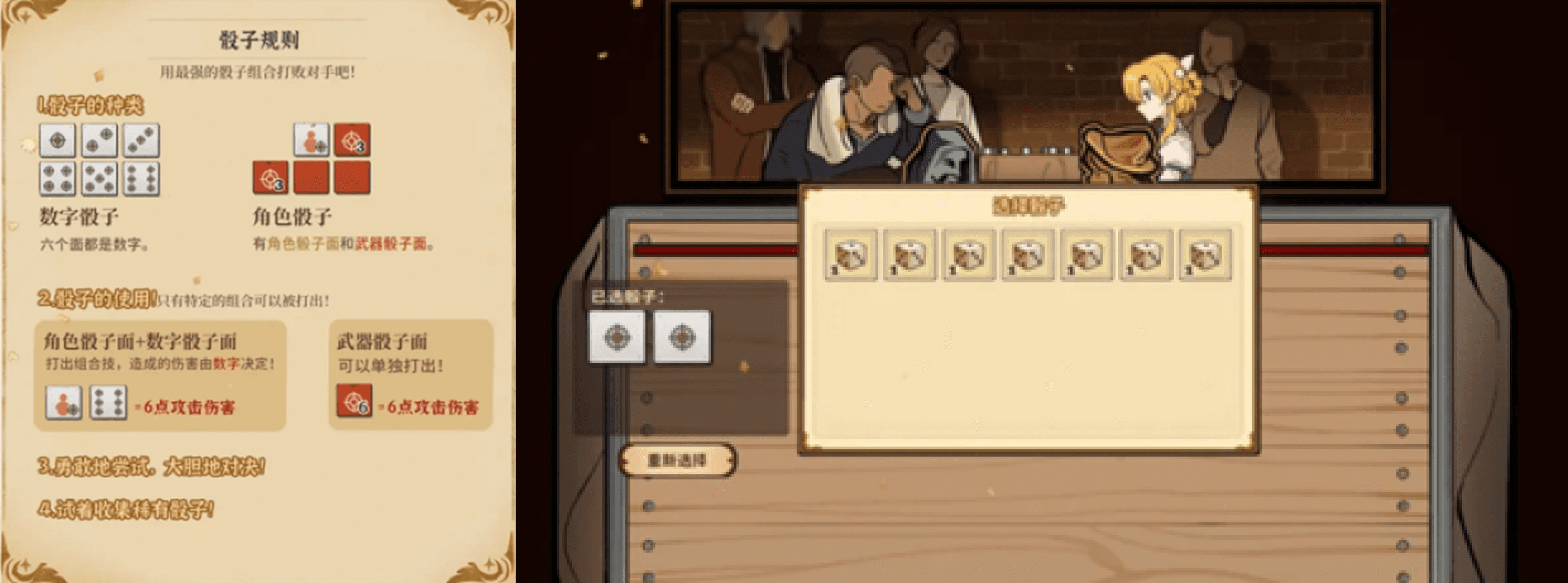
In the early game the player lacks good deck options and dice carry more blank faces, so winning leans toward luck - which makes low-health comebacks easy to pull off, delivering a massive sense of achievement and a decent income. As the game progresses, the father can obtain dice by working, but the main path is “dueling” NPCs after his stats level up: a stat-based RNG battle where winning grants rare dice on top of increased affection. With more deck options the dice game becomes richer, beautifully integrating the mini-game with the narrative.
中文对照:骰子玩法规则简单(每局从牌组选 3 个骰子,配 2 个 1-6 数字骰;角色骰分攻击、防御、回血)。前期空白面多、偏运气,容易反败为胜带来成就感和收入;后期通过打工和“决斗”获取稀有骰子并提升好感度,把小游戏与剧情很好地结合。
Shifts in User Needs
The game's reception also reflects broader changes in what players ask from games:
A Deeper Demand for Immersive Experiences
As technology blurs the line between virtual and real, users demand more freedom and exploration from games and virtual platforms - hoping for experiences that equal or even surpass real life. The idea that “everything can be a game” is rising, and users seek immersion through actual interaction. Even art exhibitions have moved beyond static displays toward immersive interactive and VR formats.
中文对照:虚拟与现实边界模糊后,用户希望在虚拟世界获得等同甚至超越现实的体验;“万物皆可游戏”兴起,连艺术展览也开始加入沉浸式互动、VR 等形式。
Companionship and Emotional Resonance as the Core Narrative Demand
Raising sims are not a mass-market genre in China. But as the “Metaverse” era brought waves of new players into gaming, many arrived seeking emotional companionship, relaxation, and a sense of achievement - the main driver behind the surge of casual and idle games over the past two years, which also monetize well because they resonate emotionally. Players no longer blindly chase outcomes; they focus on the journey.
In Volcano Princess, whether the daughter ends up an ordinary person or a hero, every playthrough delivers mutual healing between father and daughter. Expanding the audience of hardcore games depends on capturing this large casual base - but keeping them long-term will require deeper mechanics and more creative ideas.
中文对照:元宇宙时代的新玩家更多寻求情感陪伴、放松和成就感,这也是休闲、放置类游戏激增且流水不俗的原因。玩家不再一味追求结果,而更注重过程体验;重度游戏扩圈离不开这批轻度用户,但持续留存需要更深的玩法挖掘。
A Player Base That Still Trusts Domestic Games
Early marketing did not emphasize that the game was made by a two-person Chinese team, but once it broke into the mainstream, its domestic origin became a real selling point. Many players who had never touched a raising sim bought it to support the domestic industry - part of the 96% positive rating can be attributed to this. Most players do not hold sky-high demands for domestic games: as long as a game is made with care and respects its players, it counts as a good game. The player base keeps hoping for more possibilities from the Chinese gaming industry.
中文对照:游戏宣发初期并未强调由 2 名中国制作人完成,但出圈后“国产游戏”成为不小的卖点。许多从未玩过模拟养成的玩家购入以示支持;大多数玩家对国产游戏要求不高——用心、尊重玩家即是好游戏,并期待国产游戏有更多可能性和未来。